








Key takeaways
- Start every pantry organization guide the same way: empty the shelves, group similar items and check dates before you buy a single container.
- Airtight containers protect dry goods from humidity and pests, which matters in warmer coastal homes.
- Clear labels and a quick inventory list stop you from buying duplicates and help you use food before it expires.
- Households accounted for 60% of food waste measured across households, food services and retail in 2022, according to UNEP. Keeping pantry items visible can help you use what you already have.
An organised pantry is mostly about three habits: grouping similar foods, storing them in containers you can see into, and putting everything back in the same place. Get those right and you save money, waste less food and spend less time hunting for the rice behind three half-open bags of pasta.
This pantry organization guide walks you through the whole process, from the first clear-out to the habits that keep a cupboard tidy months later. Whether you have a small kitchen in Beirut or a larger pantry elsewhere in Lebanon, the same steps apply. Start with the staples you use most—rice, bulgur, lentils, pasta and flour. You do not need a large kitchen or an expensive refit: a free afternoon, a few suitable containers and a marker are enough to get started.
Start by decluttering and grouping your food items
Empty everything out first. It feels like extra work, but seeing the whole pantry on your counter is the only way to know what you actually have. Wipe down the shelves while they are clear, then sort as you go.
As you empty the shelves, make three piles: keep, donate and discard. Check expiry dates honestly. Anything unopened and in date that you know you will not use can go to a neighbour or a local food bank rather than the bin.
Then group what is left by type. Common zones include:
- Baking: flour, sugar, baking powder, cocoa
- Grains and pasta: rice, bulgur, lentils, spaghetti
- Breakfast: cereal, oats, jam, spreads
- Snacks: nuts, biscuits, crackers
- Cooking basics: oil, canned tomatoes, stock, spices
Grouping similar foods makes it easier to see what you already have. UNEP’s Food Waste Index Report 2024 estimates that households generated 631 million tonnes of food waste in 2022—60% of the total across households, food services and retail. A clear view of your pantry helps you plan meals around existing ingredients and avoid unnecessary duplicate purchases.
Choose the best containers for dry goods
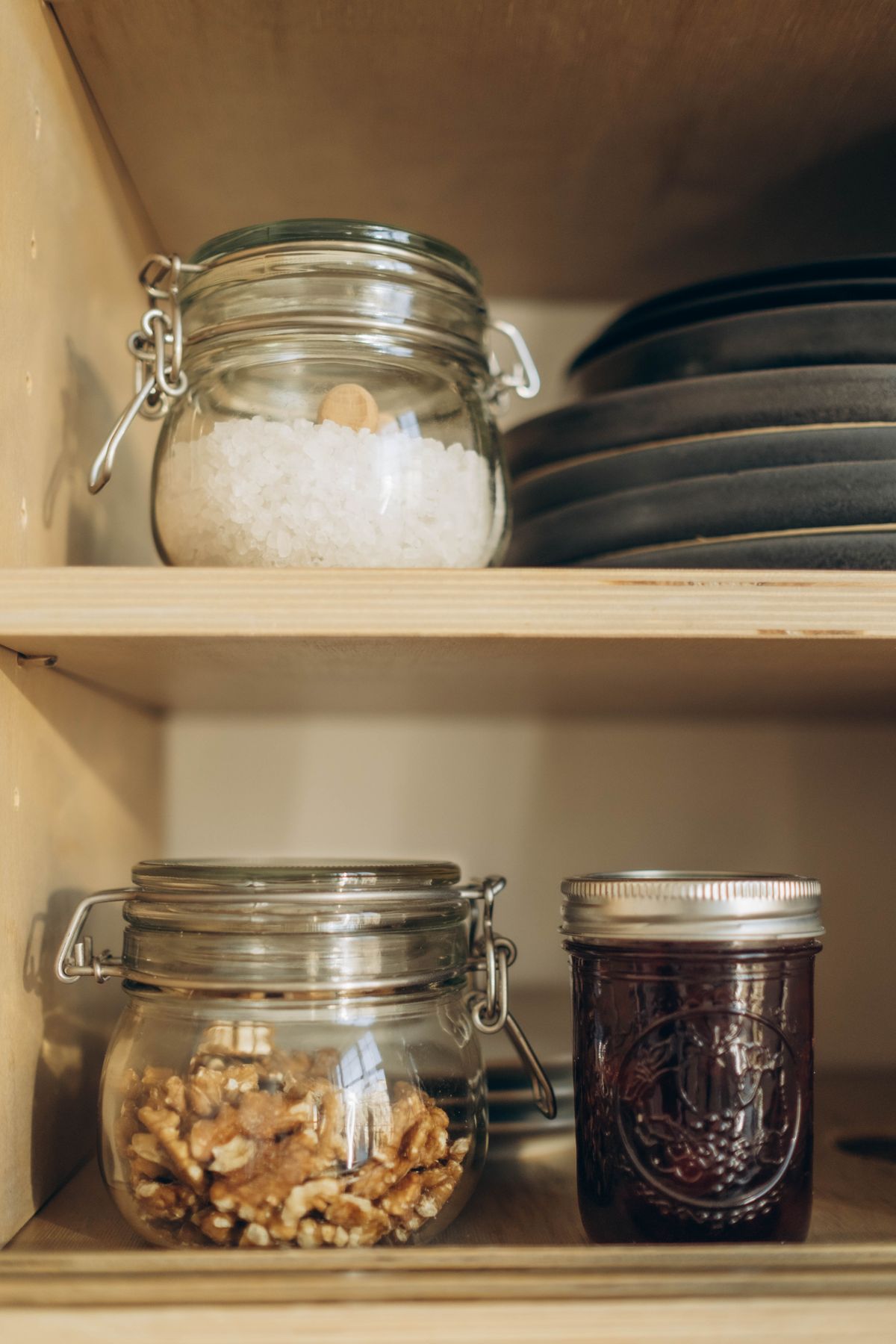
The best containers for dry goods are airtight, see-through and shaped to fit your shelves. Airtight seals keep out moisture and pests, which is a real concern in warm, humid coastal homes where an open bag of flour can turn quickly. Clear sides let you check levels without opening anything.
Think about three things before you buy.
Shape and footprint
Square and rectangular containers use shelf space far better than round ones, which leave gaps. Measure your shelf depth and height first so you are not guessing in the shop.
Material
Glass is heavy and easy to clean, and it does not hold onto smells. Food-safe plastic is lighter and harder to break, which suits high shelves and homes with children. Both work well. Choose based on where the container will live and who will be reaching for it.
Size
Match the container to the quantity you actually buy. A giant canister half-full of lentils wastes space, while one that cannot hold a full bag means you end up with an overflow packet anyway.
A matching set looks tidy, but you do not need everything uniform on day one. Start with your most-used staples, flour, rice, pasta, sugar and cereal, then add more as you go. Explore our storage and organisation collection at European Household for options to organise your cupboards. For containers that will touch food directly, check the individual product description for food suitability, capacity, dimensions and lid features before choosing.
Label everything and keep a simple inventory
Labels turn a nice-looking pantry into a genuinely useful one. Once dry goods leave their original packaging, you lose the name, the cooking instructions and the expiry date. A clear label puts that information back.
Keep labels simple and readable. Include the contents and, where it helps, the best-before date or the date you opened the packet. Removable or reusable labels are handy because staples change with the season and with whatever you cooked last week.
Pair your labels with a quick inventory. A notepad inside the cupboard door or a shared phone note is enough. List your regular staples, such as rice, bulgur, lentils, chickpeas and pasta, and mark anything running low. Check the list before shopping so you can use what is already open and avoid buying duplicates.
Maximise your shelf and door space
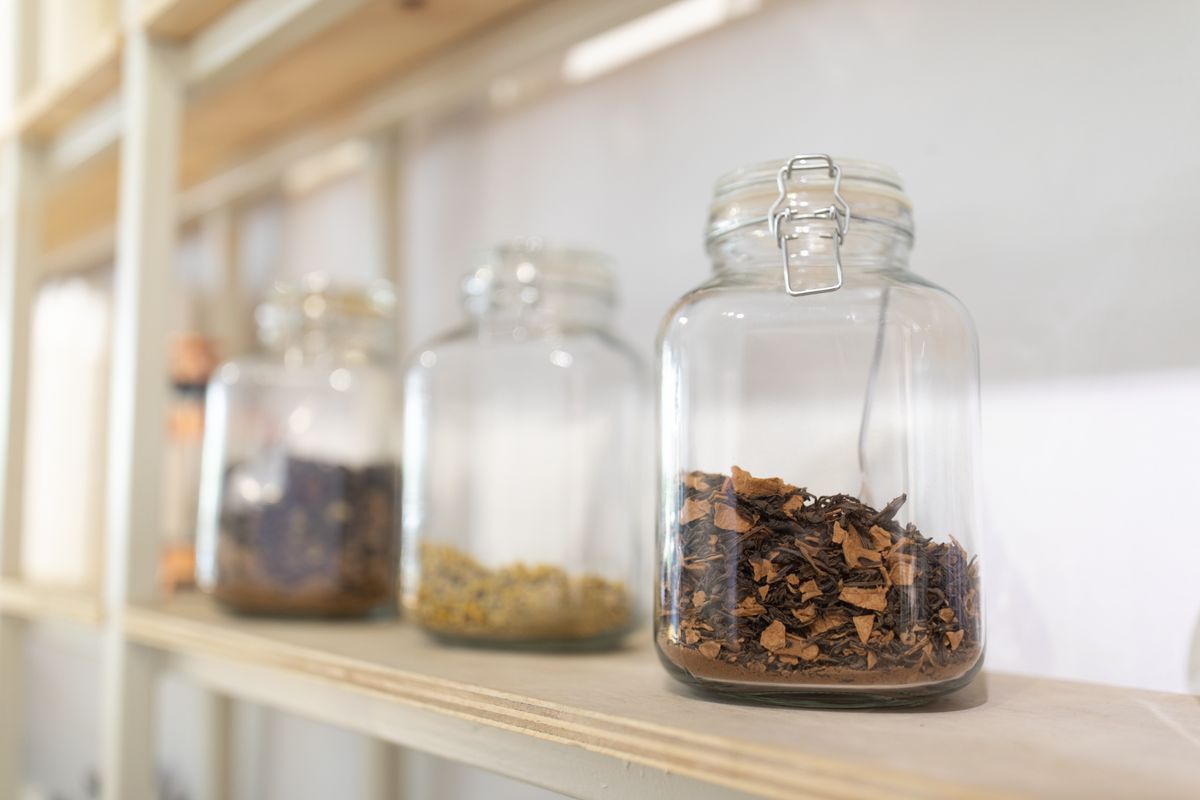
Most pantries waste vertical space. There is often a tall gap above short items that a second surface could fill. A few low-cost additions change how much a cupboard holds.
Try these space-savers:
- Tiered shelf risers so tins at the back sit higher and stay visible
- Stackable containers that build upward instead of spreading across a shelf
- Slim baskets or bins to corral loose packets, tea bags and snack bars
- A lazy Susan in a corner or on a deep shelf so you can spin to the item you want
- Over-the-door racks for spices, foil, wraps and small bottles
The back of the door is the most overlooked surface in any pantry. A slim over-the-door organiser can hold a full spice collection and free up a whole shelf. Keep the heaviest items low and the lightest up high, both for safety and so you are not lifting a full jar over your head.
Zones help here too. Put everyday items at eye level, occasional items higher up, and bulk or backup stock down low. Children's snacks sit lower so they can reach them without climbing, which keeps the whole system safer.
Keep your pantry organized for the long term
The hardest part is not the first tidy-up. It is keeping the pantry organized once normal life resumes. The trick is to make upkeep small and routine rather than a big occasional project.
Three habits do most of the work:
- First in, first out. When you restock, move older items to the front and put new ones behind. You reach for the oldest first and far less expires.
- The five-minute reset. Once a week, return anything that drifted out of its zone and wipe up spills. Little and often beats a rare deep clean.
- Shop your pantry first. Before you write a shopping list, check what you already have. This is where your inventory earns its keep.
Review your pantry a few times a year and adjust the layout when your shopping or cooking habits change. Keep product labels and storage instructions when transferring food into containers, and make sure dates remain easy to find.
To keep your pantry organized, start with one shelf and your most-used ingredients. Measure the space, reuse suitable containers you already own, and buy only what fills a practical gap. Browse European Household’s storage and organisation collection to find options for your home in Lebanon, checking each product’s dimensions and intended use before ordering.
Frequently asked questions
How often should I reorganise my pantry?
A full reset two or three times a year is usually enough. In between, spend five minutes each week returning stray items to their zones and checking for anything close to its expiry date.
Do I really need airtight containers for dry goods?
Airtight containers are worth it for staples like flour, rice, pasta and cereal. They keep out moisture and pests, which is especially helpful in humid coastal homes, and they make it easy to see when you are running low.
What is the best way to organise a small pantry?
Use vertical space and the back of the door. Stackable containers, tiered shelves and slim over-the-door racks let a narrow cupboard hold far more than flat shelving alone.
How do I stop food from expiring before I use it?
Keep a simple inventory and practise first in, first out: place newer items behind older ones so you reach for the oldest first. A quick list on the door helps you plan meals around what you already have.


