








Key takeaways
- Immersion blenders, also called hand blenders or stick blenders, are compact options for soups, sauces and small blending tasks.
- Countertop blenders are useful for smoothies and larger batches. For crushing ice, choose a model specifically designed for that purpose.
- Motor power matters, but wattage alone does not determine blending performance. Check the blade design, speed controls and recommended uses.
- Choose attachments you will use: a whisk for beating eggs or whipping cream, a measuring cup for preparation, or a larger jug for several servings.
- Detachable parts make cleaning easier. Check which components are dishwasher safe and keep the motor unit out of water.
- The best value blender fits your cooking habits, kitchen space and budget.
Choosing a kitchen blender starts with what you prepare most often. In a Lebanese kitchen, that might mean blending cooked lentils for a smooth shorbet adas, preparing a vegetable soup, mixing a sauce or making fruit smoothies for the family. Your usual recipes and portion sizes help determine which blender will be most useful.
An immersion blender works in a suitable pot, bowl or blending cup and takes up little storage space. A countertop blender has its own jug and can be convenient for preparing several drinks at once. For hot ingredients, follow the manufacturer’s temperature limits and handling instructions. For ice and frozen ingredients, check the model’s capabilities rather than relying on motor power alone.
At European Household, the Silvercrest 350W Hand Blender offers a straightforward option for blending and puréeing. The AMBIANO Skandi 800W Hand Blender adds a whisk attachment and 1L measuring cup, while the 2000W Commercial Blender with a 1.8L Jug provides a countertop option with an ice-crushing function.
This guide explains how to compare countertop and immersion blenders, motor power, blade design, useful attachments and cleaning requirements so you can choose the right blender for your kitchen.
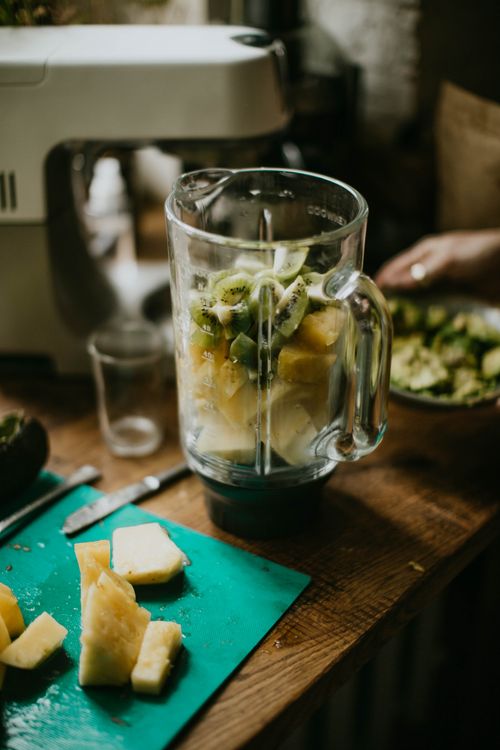
Countertop vs immersion blenders
The first decision when choosing a kitchen blender is whether a countertop blender or an immersion blender better suits your recipes. Both are useful, but they differ in capacity, storage space and how you use them.
Countertop blenders: smoothies, frozen drinks and larger batches
A countertop blender has a jug that sits on a motorised base. It is a convenient choice for preparing several servings of smoothies or milkshakes, especially when making drinks for family or guests.
Our 2000W Commercial Blender has a 1.8L jug, six stainless-steel blades and ice-crushing capability. It is an option to consider if frozen drinks and ice-based recipes are regular tasks in your kitchen.
Allow space for the appliance on your worktop or in a cupboard, and follow the jug’s maximum-fill markings. A larger jug does not mean you should fill it to the rim.
Immersion blenders: soups, sauces and compact kitchens
An immersion blender, also called a hand blender or stick blender, works directly in a suitable pot, bowl or blending cup. It is useful for blending cooked vegetables, preparing sauces and making small portions without using a large jug.
For Lebanese meals such as smooth lentil soup, a hand blender can simplify preparation. Remove the pot from the heat before blending and follow the appliance’s temperature limits. Keep the blade guard submerged during operation to help reduce splashing.
The Silvercrest 350W Hand Blender offers a detachable stainless-steel blending arm and turbo button for blending and puréeing. The AMBIANO Skandi 800W Hand Blender includes a whisk and 1L measuring cup, making it useful when you also want to beat eggs or whip cream with the appropriate attachment.
If soups, sauces and small portions are your main tasks, start with a hand blender. If you regularly prepare several drinks or crush ice, consider a countertop model designed for those jobs.
Power and blade quality explained
Motor power is usually listed in watts, but this figure alone does not tell you how smoothly a blender will process food. Blade design, the shape of the blending container, ingredient quantities and operating time all affect the result.
The Silvercrest 350W and AMBIANO 800W are hand blenders, while the 2000W Commercial Blender uses a countertop jug. Their wattages should be considered alongside these different designs and intended uses. An 800W hand blender is not automatically suitable for every task that a countertop blender can handle.
For soft fruit, cooked vegetables and sauces, focus on the recommended uses, comfortable handling and speed controls. For ice or frozen ingredients, look for explicit confirmation that the model can process them. Do not assume a turbo button or stainless-steel blade makes a hand blender suitable for crushing ice.
Stainless-steel blades are common in kitchen blenders because they resist corrosion and can be cleaned with appropriate care. However, blade count alone is not a measure of quality: a two-blade hand blender and a six-blade countertop blender work in different ways.
Before buying, check the maximum continuous running time, any required cooling breaks and the instructions for your intended ingredients. Matching the appliance to your routine is more useful than choosing by the highest wattage alone.
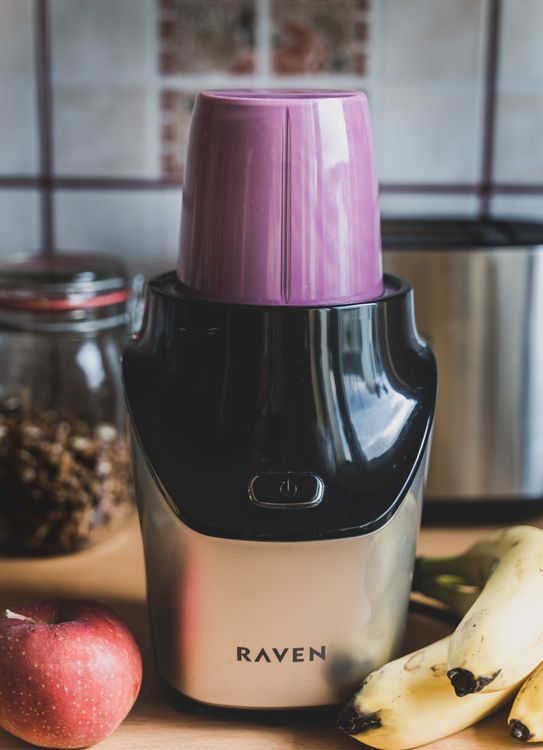
Choosing a kitchen blender that matches your needs
Think about what you prepare during a typical week. Your most frequent recipes are a better starting point than a long list of features.
-
Soups and sauces: A hand blender is useful for blending cooked vegetables and preparing smooth lentil soup. Follow the model’s temperature limits and remove the pot from the heat before blending.
-
Small portions: An immersion blender can work well in a suitable narrow blending cup, provided there is enough food to cover the blade guard.
-
Whipping cream and beating eggs: Choose a set with a whisk attachment, such as the AMBIANO Skandi 800W. Use the attachment intended for the task.
-
Smoothies and frozen drinks: A countertop blender offers a dedicated jug for mixing several servings. For ice and frozen fruit, the 2000W Commercial Blender is specifically listed for these uses.
-
Limited kitchen space: A compact hand blender is easier to store. For a countertop model, measure the available width and height, including clearance beneath cupboards.
Capacity matters too. A 1.8L jug can be useful when preparing drinks for family or guests, while a blending cup may be more convenient for a small sauce or individual portion. Always follow the maximum-fill markings and recommended batch sizes.
For a compact kitchen in Beirut or a busy family home, the aim is the same: choose an appliance that handles your regular tasks and is easy to reach, use and put away.
Easy-clean designs to look for
Cleaning should be part of your buying decision. Check how attachments detach, which surfaces you can reach and whether any parts are labelled dishwasher safe.
Look for these practical features:
-
A detachable blending arm: This lets you clean the food-contact section separately from the motor unit.
-
Clear care instructions: A dishwasher-safe cup does not mean the blending arm, whisk housing or lid is also dishwasher safe.
-
Accessible food-contact surfaces: Check how to clean around blades and beneath removable seals without forcing parts apart.
-
A motor housing that is easy to wipe: Keep the motor unit, cable and plug out of water.
After use, switch off and unplug the blender before removing attachments or cleaning. Wash approved washable parts as instructed, before food residue dries onto them. Handle sharp blades carefully and use a suitable brush where needed.
Only remove blades or seals if the manufacturer’s instructions say they are removable. A detachable hand-blender shaft does not necessarily have a removable blade.
Wipe the motor housing with a lightly damp cloth, then dry it. Let cleaned attachments dry fully before reassembling or storing them. If the manual includes a water-and-detergent blending cycle, follow its stated quantities and procedure.
Best value options for daily use
The best value blender is the one whose features you will use regularly. Compare the type of appliance, included attachments and intended tasks alongside the price.
Silvercrest 350W Hand Blender: straightforward blending and puréeing
The Silvercrest 350W Hand Blender is worth considering if you mainly want a compact appliance for everyday blending. It has a detachable stainless-steel blending arm and a turbo button, without the additional whisk included in the AMBIANO set.
AMBIANO Skandi 800W: blending with a whisk attachment
The AMBIANO Skandi 800W Hand Blender includes two speed settings, a stainless-steel blending attachment, a whisk and a 1L measuring cup with a lid. The extra attachment is useful if you regularly beat eggs or whip cream as well as prepare soups and sauces.
2000W Commercial Blender: a jug blender for ice and frozen drinks
The 2000W Commercial Blender has a 1.8L jug and six stainless-steel blades, with listed capability for crushing ice and blending frozen fruit. Consider it when these tasks are a regular part of your routine and you have space for a countertop appliance.
Start with the jobs you need your blender to do, then compare the features that support them. Explore these three options at European Household and check each product’s specifications and care instructions before choosing.
Frequently asked questions
Is a countertop or immersion blender better for everyday use?
An immersion blender, also called a hand blender, is convenient for soups, sauces and small portions. A countertop blender is useful for preparing several servings of smoothies or milkshakes. For frozen drinks and ice crushing, choose a model specifically approved for those tasks.
How much motor power do I need in a kitchen blender?
Choose according to your recipes rather than wattage alone. The Silvercrest 350W and AMBIANO 800W are hand blenders, while the 2000W Commercial Blender is a countertop model with a 1.8L jug and ice-crushing capability. Blade design, batch size and the manufacturer’s instructions matter alongside motor power. A higher wattage does not automatically make a hand blender suitable for ice.
Are stainless steel blades better than other materials?
Stainless steel is a common blade material because it resists corrosion and is durable with proper care. However, blade material and blade count alone do not determine blending quality. Consider the complete appliance, its design and the ingredients it is intended to process.
How do I clean a blender safely?
Switch off and unplug the blender before removing attachments or cleaning. Wash only the parts approved for washing, following the manufacturer’s instructions. Keep the motor unit out of water and wipe it with a lightly damp cloth. Handle blades carefully, and only use the dishwasher for components specifically labelled dishwasher safe.
What is the best value blender for daily use?
The best value depends on what you need. Consider the Silvercrest 350W for straightforward blending and puréeing, or the AMBIANO Skandi 800W if you also want a whisk and measuring cup. The 2000W Commercial Blender is an option for regular ice crushing, frozen drinks and larger batches. Compare current prices, included accessories and intended uses before choosing.


